Medical Center MEDICA 2005
Affiliates Sofia, Vidin and
MC Academica 2008 - Pleven

Obsessive compulsive disorder (OCD) is characterized by repetitive, unwanted thoughts or sensations (fixations) that cause patients to perform monotypic actions (impulses).
Thus, performing repetitive compulsive actions such as washing, constant checks, etc. can significantly impair personal daily activities and social contacts.
OCD occurs in about 1.1% of the general population. In other words, 12 out of every 1,000 people suffer from OCD. It is likely that the actual number of those affected is higher because many of them are unwilling to share their symptoms.
OCD presents as a combination of symptoms ranging from physiological to mental. They vary from patient to patient. OCD patients present with fixations, impulsive actions, or a combination thereof. Intrusive thoughts (fixations) cause constant anxiety.
Obsessions are repetitive thoughts or images that cause severe anxiety and nausea. Many OCD patients assume that these obsessions are the result of brain activity and are abnormal and unhelpful. However, compulsions cannot be mentally normalized. Many OCD sufferers ignore or tone down the presence of such compulsions or counter them with competing ideas or actions.
Intrusive thoughts cause the development of anxiety based on the fear that something bad will happen. The sufferer feels compelled to perform irrational, time-consuming actions to relieve anxiety. In very severe cases, the repetitive actions take up the entire day, making the performance of daily activities virtually impossible.
Some of the most common compulsions are as follows:
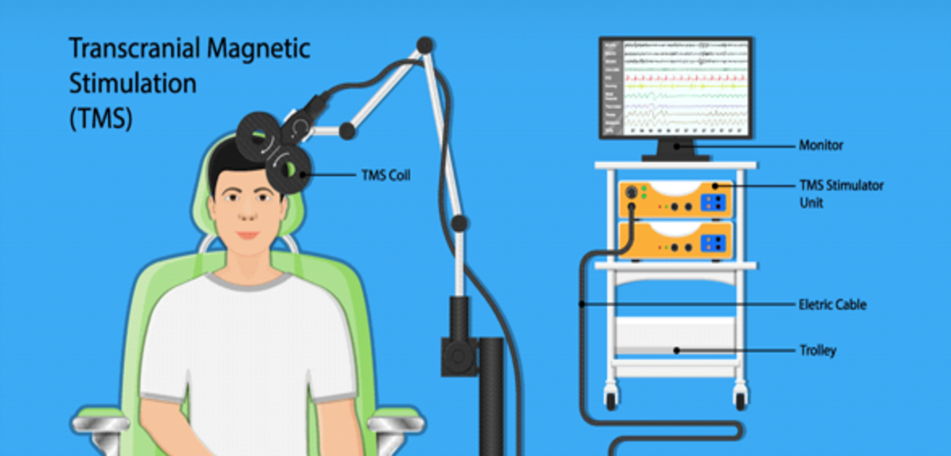
TMS uses focused magnetic pulses to affect specific brain regions. In OCD, magnetic pulses are directed to the dorsolateral prefrontal cortex (DLPFC), anterior cingulate cortex (ACC), supplementary motor area (SMA).
Personalized treatment: Before starting TMS, our medical center uses neuroimaging techniques such as qEEG to identify the specific areas of the brain that may be hyperexcited or suppressed in OCD patients. These regions often include the DLPFC, ACC, and SMA, which are involved in cognitive control and emotion regulation. Magnetic pulses in TMS modulate neuronal activity in target brain regions. In OCD, the goal is to normalize the activity in these regions. By modulating brain activity, the main symptoms of OCD are significantly alleviated - obsessive thoughts and actions, anxiety.
Neuroplasticity and long-term effect: TMS can induce neuroplastic changes in the brain leading to long-term improvement in OCD symptoms. Changes occur in synaptic connections, neurotransmitter levels, and neural networks. Clinical studies show that TMS improvement is not only observed during therapy sessions, and the beneficial therapeutic effects are durable and long-term.